
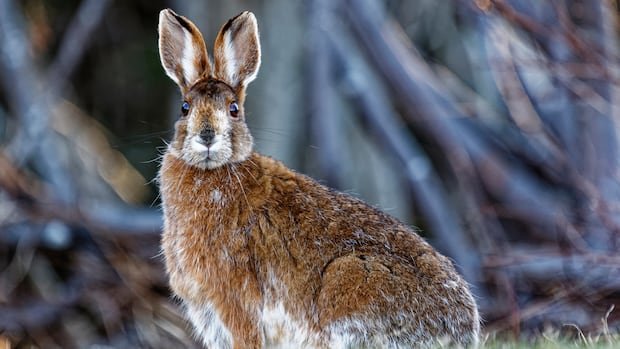

The population of snowshoe hares on Prince Edward Island seems to have grown following post-tropical storm Fiona, according to a wildlife biologist from the province. Garry Gregory, working with the fish and wildlife division of P.E.I., noted an increase in reports from Islanders who are observing more “rabbits” in their yards. However, these animals are not rabbits, as rabbits are not indigenous to the region. Gregory confirmed that the sightings are likely snowshoe hares.
While there is no official data tracking the growth of the snowshoe hare population, Gregory believes that changes in the landscape post-Fiona make it plausible to assume an increase. The storm’s aftermath left behind dense debris in forests and woodlots across P.E.I., providing ideal escape cover for hares in the form of brush piles, downed trees, and thick patches of deadfall.
The improved hiding spots contribute to higher hare survival rates, potentially leading to a rise in their population. As the debris breaks down over time and coniferous trees shed their needles, the advantage hares gained from the storm will gradually diminish.
Following Fiona, the forest canopy opened up to sunlight, fostering the growth of early successional plants that hares depend on for winter food. Snowshoe hares feed on twigs and buds of plants like willows, grey birch, some maples, and pin cherry during the colder months.
The enhanced habitat not only benefits snowshoe hares but also supports other wildlife such as songbirds and American woodcock. However, the restoration of certain stands, like white spruce, to their pre-Fiona state could take decades.
While an increase in hares may not necessarily translate to a surge in predators on P.E.I., Gregory emphasized that predators on the island are generalists, feeding on a variety of prey. It is crucial not to feed hares if spotted in yards, as they naturally avoid human contact and excessive human interaction can lead them closer to potential threats like dogs.
Gregory advised against feeding hares, particularly in summer when they have abundant natural food sources. Feeding them could also expose them to risks from predators like dogs. Additionally, he addressed concerns about hares carrying ticks, noting that the tick species commonly found on hares pose no significant health risks unless the infestation is severe.
Overall, the increase in snowshoe hares on P.E.I. post-Fiona is attributed to the altered landscape providing them with better hiding spots and access to winter food sources, contributing to their survival and potential population growth.