
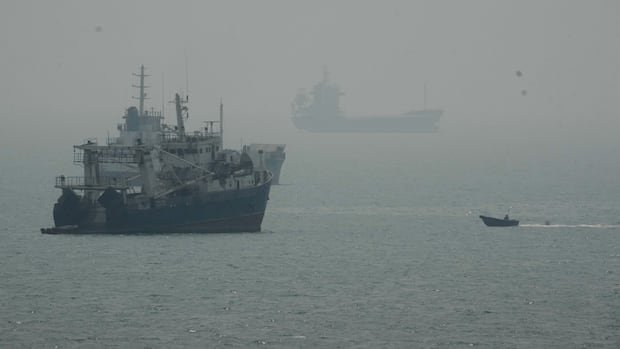

Iran confirmed on Wednesday that it had engaged in attacks on 10 ships near the Strait of Hormuz following the sinking of five Iranian oil tankers by the United States. This marked the most significant exchange of attacks on shipping by both nations since the onset of the six-month-long conflict.
The Islamic Revolutionary Guard Corps (IRGC) of Iran announced that it retaliated by launching a ballistic missile strike on a U.S. base near Al Azraq in eastern Jordan. Additionally, Iran reported firing on two U.S. vessels and eight oil tankers that were attempting to navigate through a restricted area in the Strait of Hormuz as designated by Iran.
These incidents in and around the crucial waterway caused a spike in oil prices, with the international Brent crude benchmark exceeding $100 per barrel for the first time since July. The ongoing conflict between Saudi Arabia and the Iran-aligned Houthis in Yemen has added further instability to energy markets. The recent Houthi attack on four cities in Saudi Arabia resulted in significant damage to oil installations, with 73 people reported injured.
Consumers in the U.S. have experienced a notable increase in gasoline prices, with the average cost of a gallon of regular gasoline reaching $4.15 on Tuesday, a 26% rise from the previous year. Diesel prices surged even higher to $5.90 per gallon, representing a 59% year-over-year increase.
The escalating tensions have led to concerns about the possibility of a durable agreement being reached before the U.S. midterm elections. Bank of America analysts expressed skepticism about the likelihood of a resolution in the near future.
Canada has also witnessed a rise in gas prices since the conflict began, prompting the government to extend the gas tax holiday until the end of January to alleviate the financial burden on consumers.
Iran disclosed the establishment of a wider maritime restricted zone extending from Chabahar in Iran to parts of the Gulf of Oman and the Arabian Sea. This announcement came in response to previous statements indicating Iran’s intention to create a restricted zone outside the Strait of Hormuz.
In a separate incident, an Iraqi fuel oil tanker was struck by a drone in Iraqi territorial waters, causing a fire on board the vessel. The UK Maritime Trade Operations agency reported incidents of vessels being disabled by fire in the northern Gulf and Gulf of Oman during military activities in the region.
Iran’s actions have disrupted the flow of oil through the vital Strait of Hormuz, impacting global oil supply and other essential resources. The U.S. has implemented a military blockade of Iranian ports in response, aiming to guide tankers safely through the strait despite increasing challenges in assessing the extent of oil shipments.
Despite the ongoing conflicts and disruptions, efforts continue to be made to navigate the complex geopolitical landscape in the region.