
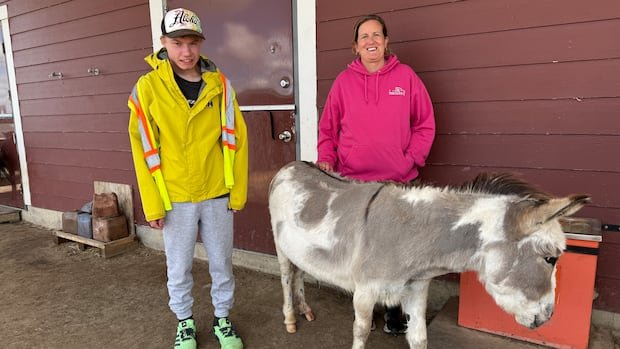

A vibrant farm in rural Saskatchewan is abuzz with activity along a gravel road. People with intellectual disabilities are actively engaged in gardening tasks on a sunny August day. While some individuals are harvesting beans, a small group is tending to the corn and potato crops.
At Farm in the Dell, resident Lynne Cammidge, aged 52, expresses her joy in the serene environment. She fondly recalls her initial impression of the farm’s beauty when she first moved into the rural group home 15 years ago. Cammidge explains that her decision to reside at the farm was driven by a desire for a better living situation compared to a group home in Saskatoon.
Situated approximately 45 kilometers northeast of Saskatoon near Aberdeen, Farm in the Dell, a non-profit organization, offers individuals with intellectual disabilities the opportunity to engage in meaningful work and embrace a rural lifestyle. The site manager, Shauna Dollansky, highlights the residents’ capability in taking care of the farm, emphasizing the pride they take in their work.
Many of the residents, having grown up in farming or rural settings, seek a sense of purpose and connection to the land. The concept of farm-style living for individuals with intellectual disabilities was pioneered by Farm in the Dell in the United States in 1986. Today, the organization operates internationally with multiple locations, including two in Saskatchewan.
The Aberdeen location, established in 2010, accommodates seventeen clients across two houses with a dedicated staff of around 40 members. Financial support for the group home is provided by the Ministry of Social Services through Community Living Service Development. The executive director, Lynette Zacharias, emphasizes the importance of fostering a sense of community and family among the residents.
Residents at Farm in the Dell actively participate in various activities, including attending local events and engaging in day programs. The opportunity to work on the farm, interact with animals, and harvest fresh produce enhances their quality of life. The farm also serves as a hub for communal activities such as bingo and socializing with Aberdeen seniors.
The success of the Aberdeen farm led to the establishment of a second group home in Biggar, Saskatchewan. This expansion project, supported by the local community and Farm in the Dell, aims to provide a similar supportive environment for adults with intellectual disabilities. Plans are underway to introduce the Farm in the Dell concept to more communities to meet the growing need for such services.
To sustain its operations, Farm in the Dell relies on an annual budget of approximately $3 million from the Ministry of Social Services. The ministry, which supports nearly 3,000 residential spaces for adults with intellectual disabilities, is actively building new group homes to meet the demand for specialized care.