
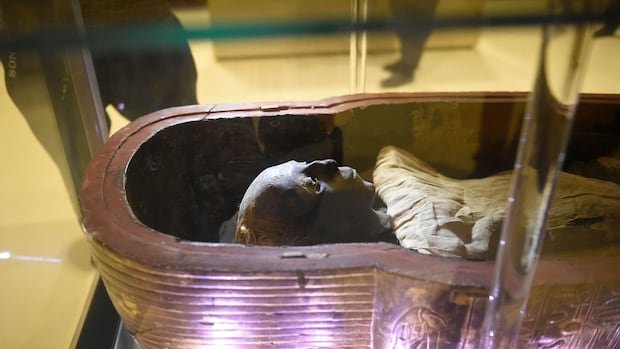

A recent study reveals a global online market for preserved human remains, posing potential health risks, as per scientists. Lead author Kirsty Squires and her team scrutinized 128 web posts from 2015 to 2025 showcasing or advertising human and animal remains for sale. Mummified heads, hands, and feet were commonly featured, according to Squires, a bioarchaeology professor at the University of Staffordshire in England.
These preserved body parts may contain dormant microorganisms like bacteria and fungi, raising concerns about health issues if mishandled. The study emphasizes that improper storage conditions can lead to visible deterioration of remains, releasing fungal spores and bacteria into the air. Such microorganisms, surviving for centuries in mummified tissue, can pose risks to individuals, especially those with weakened immune systems.
Furthermore, certain mummified body parts may carry toxic chemicals like arsenic and mercury from historic embalming fluids. Although the study does not report any documented illnesses from handling online-sold human remains, historical incidents point to fatal consequences of exposure to airborne spores from ancient tombs.
While some experts downplay the health risks for collectors who handle these remains cautiously, others emphasize the ethical concerns surrounding this trade. In Canada, where 11 individuals were identified in the study as sellers of human remains, the lack of meaningful regulations in the trade is highlighted. Shipping companies like Canada Post, Purolator, and UPS explicitly prohibit the shipment of human remains, allowing only cremated remains under specific conditions.
Despite restrictions, sellers can evade scrutiny by mislabeling packages as archaeological samples, raising concerns about the safety of postal workers handling damaged packages. The study suggests considering a ban on the online trade of human remains to address the ethical implications of commodifying ancestral bodies from diverse regions.Calls for stricter regulations in Canada similar to those proposed in the UK to prohibit the online sale of human remains are gaining momentum among experts.