
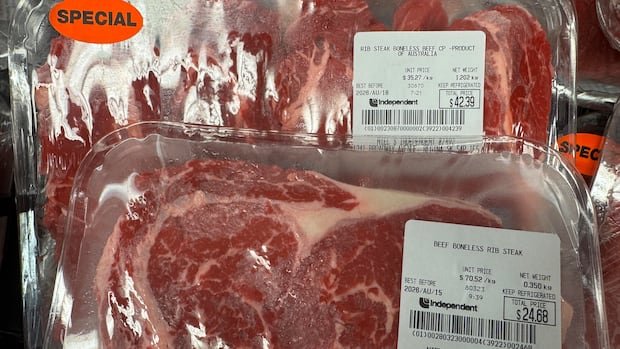

Australian beef is now available in Canadian supermarkets at significantly lower prices compared to Canadian beef, causing concerns among local producers while some consumers are pleased with the affordability. Tyler Fulton, president of the Canadian Cattle Association, noted that the Australian beef option has been present for years but has gained more visibility recently, especially for steak cuts. Factors contributing to the price gap include the grass-based production model in Australia, resulting in leaner beef with less marbling than Canadian beef, which is preferred in Canada.
The increased availability of Australian beef in Canada is a result of the Comprehensive and Progressive Agreement for Trans-Pacific Partnership (CPTPP) coming into effect in 2018, granting Australia more access to the Canadian market. Although this benefits Canada in other markets like Japan and Vietnam, some consumers expressed preferences for locally sourced beef due to quality concerns. Retailers are using the imported beef as a ‘loss leader’ tactic to attract customers with lower prices.
CBC News interviewed shoppers at Loblaws-owned stores in Regina, revealing mixed opinions on the affordability and quality of Australian beef. Some consumers have shifted their diets due to the high cost of Canadian beef, opting for alternatives like bulk purchases from local producers. While some consumers prioritize quality over price, others are open to trying Australian beef if Canadian prices continue to rise.
In response to inquiries, Loblaws emphasized its commitment to supporting Canadian beef producers while providing customers with diverse options. Tyler Fulton expressed optimism about the growth potential for domestic producers, citing recent increases in the Canadian beef herd and favorable market conditions. He emphasized the importance of catering to domestic consumers while exploring international opportunities for the beef sector.